当URL的参数中出现诸如+,空格,/,?,%,#,&,=等特殊字符串符号时,因为上述字符有特殊含义,导致服务器端无法正确解析参数,如何处理?解决办法:将这些字符转化成服务器可以识别的字符。
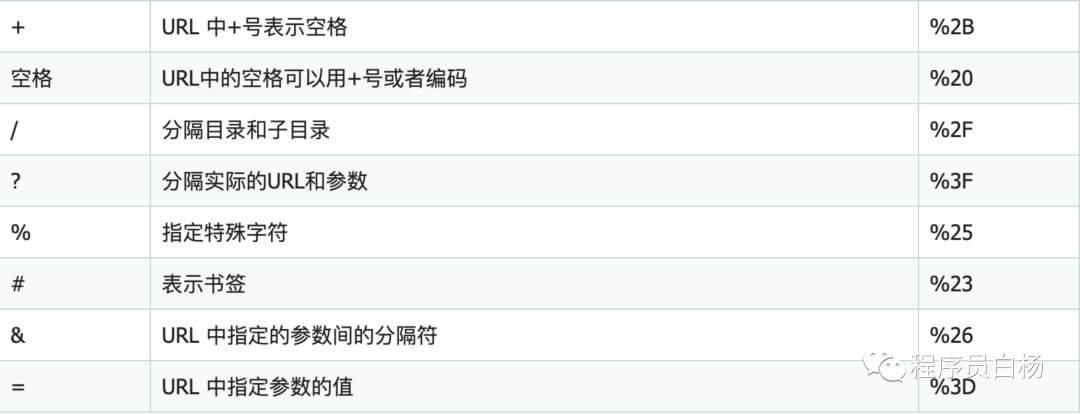
一. encodeURI()
把字符串作为 URI整体进行编码,所以URI组件中的特殊分隔符号 (;/:@&=+$?#) (可以使用 encodeURIComponent() 方法分别对特殊含义的 ASCII 标点符号进行编码。),encodeURI() 函数不会进行转义。该方法不会对 ASCII 字母和数字进行编码,也不会对这些 ASCII 标点符号进行编码:- _ . ! ~ * ‘ ( ) 。
1
2
3
| encodeURI('#')
encodeURI('_')
|
1
2
3
4
| encodeURI('https://mp.weixin.qq.com/')
encodeURI('https://mp.weixin.qq.com/cgi-bin/appmsg?t=media/appmsg_edit_v2')
|
二. encodeURIComponent()
把字符串作为 URI 组件的一部分(如path/query/fragment等)进行编码,所以用于分隔 URI 各个部分的特殊分隔符号(;/?:@&=+$,#)也会被转义。返回值中某些字符将被十六进制的转义序列替换。该方法也不会对 ASCII 字母和数字进行编码,也不会对这些 ASCII 标点符号进行编码:- _ . ! ~ * ‘ ( ) 。
1
2
| encodeURIComponent(';')
encodeURIComponent('#')
|
1
2
| encodeURIComponent('https://mp.weixin.qq.com/cgi-bin/appmsg?t=media/appmsg_edit_v2')
|
三. decodeURI()/decodeURIComponent()
decodeURI() 函数可对 encodeURI() 函数编码过的 URI 进行解码。
decodeURIComponent() 函数可对 encodeURIComponent() 函数编码的 URI 进行解码。
1
2
3
4
| decodeURI('https://mp.weixin.qq.com/')
decodeURI('https://mp.weixin.qq.com/cgi-bin/appmsg?t=media/appmsg_edit_v2')
|
1
2
3
4
| decodeURIComponent('%3B')
decodeURIComponent('%23')
encodeURIComponent('https%3A%2F%2Fmp.weixin.qq.com%2Fcgi-bin%2Fappmsg%3Ft%3Dmedia%2Fappmsg_edit_v2')
|
四. escape()
用于对字符串进行编码,并返回编码字符串。但目前已不推荐使用该函数对URI进行编码。(已经弃用)
1
2
3
4
| decodeURI('https://mp.weixin.qq.com/')
decodeURI('https://mp.weixin.qq.com/cgi-bin/appmsg?t=media/appmsg_edit_v2')
|
1
2
3
4
| decodeURIComponent('%3B')
decodeURIComponent('%23')
encodeURIComponent('https%3A%2F%2Fmp.weixin.qq.com%2Fcgi-bin%2Fappmsg%3Ft%3Dmedia%2Fappmsg_edit_v2')
|
问题思考
在项目中哪里会用到呢?
假如你要给后端传一个16进制 HEX值(#FFFFFF),那么你就会用到encodeURIComponent去转义。